(718) 957-8695
 CALL US NOW
 EMAIL US NOW

As Bronx workplace accident lawyers, we know that social media has changed the world, and it offers users a number of conveniences and advantages. Facebook, Twitter, and the other social media platforms are great ways to stay in touch with friends and family members.
Social media also allows people who are “shut in” or temporarily incapacitated to stay in touch with the rest of the world. However, if you’re stuck at home because you were injured on the job, you may need to censor yourself or stay off social media altogether. You’re about to learn why.
HOW HAVE WORKERS’ COMP CLAIMS BEEN INVESTIGATED IN THE PAST?
In the past, the insurance companies that provide workers’ compensation coverage hired investigators to conduct surveillance on persons who were suspected of filing fraudulent workers’ compensation claims.
If an investigator took a photo of someone shoveling snow or playing softball, it usually meant the denial of that person’s workers’ comp claim. With the emergence of social media, it is less likely (but still possible) that an investigator will park in front of your home with a camera.
HOW ARE WORKERS’ COMP CLAIMS INVESTIGATED TODAY?
Today, before driving to your residence, an insurance investigator will instead take a look at your Facebook page and your Twitter account. Frequently, investigators will find social media evidence that can create substantial doubt about someone’s workers’ compensation claim.
If you are seeking or receiving workers’ compensation benefits, posting even an innocent comment like “Today’s a great day” is something that you will absolutely have to avoid.

Insurance investigators routinely scrutinize social media accounts for photographs, videos, comments, and anything else that might be used as evidence to deny someone’s workers’ compensation claim.
HOW AND WHY ARE WORKERS’ COMPENSATION CLAIMS DENIED?
Obviously, the insurance companies offering workers’ compensation coverage can save money if they don’t have to pay someone’s benefits, so if they have any reason whatsoever to suspect that your injuries are not as extensive as you claim, you will probably be targeted for investigation.
When an insurer can demonstrate that you are in fact not injured or that the injury is less serious than you’ve claimed, the insurer will deny your workers’ comp claim.
These insurance companies and their attorneys know how to twist your words and use them against you. They know how to make an innocent photo look incriminating. If they can persuasively argue that your claim is fraudulent, you could lose your workers’ comp benefits.
Privacy settings do not really help. In some cases, an insurance company lawyer can request a subpoena that allows access to protected and even deleted online content.
WHO CAN HELP YOU OBTAIN WORKERS’ COMPENSATION BENEFITS?
Here in New York, if you are injured on the job, and if you expect to qualify for workers’ compensation benefits, you should arrange as quickly as possible to meet with an experienced Bronx workplace accident attorney.
The law in New York requires almost every employer to offer workers’ comp coverage to employees. You do not have to take legal action or prove that anyone was at fault to qualify for benefits.
If you are injured in the “course and scope” of your employment, you are eligible to receive workers’ compensation payments. If you are not sure whether you’re covered, find out from your employer.
HOW WILL A WORKPLACE ACCIDENT ATTORNEY HELP YOU?
If you are injured on the job, a workers’ comp lawyer can answer all of your questions and explain your rights, review your claim, and aggressively advocate for your workers’ compensation benefits if those benefits are terminated or denied for any reason.
A good workers’ comp lawyer will review the details in your case, review your workers’ comp claim for accuracy and completeness, and ensure that no mistakes or misunderstandings delay your benefits. When you are injured and you can’t work, you will need those payments quickly.
You will also benefit from the experience and insights that a good workers’ comp attorney will bring to your case. For example, many workers’ compensation lawyers would advise you to avoid social media entirely while your claim is pending and while you are receiving benefits.
IF YOU GO ONLINE, WHAT SHOULD YOU PRESUME?
If you go online while your workers’ compensation claim is pending or at any time while you are receiving benefit payments, you should presume that everything you do on social media is being monitored.
Avoid posting any photos of yourself. You should also avoid making any mention of your accident, your injury, or your workers’ compensation claim. No one who checks out your social media pages should even suspect that you’re injured or that you’ve made a workers’ comp claim.

If people you do not know send friend requests, be cautious. An investigator posing as a friend of a friend might be seeking evidence to use against you. If you don’t know the person, don’t accept a new social media friend request while you are seeking or receiving workers’ comp benefits.
WHAT ELSE DO INSURANCE INVESTIGATORS SCRUTINIZE?
Your own social media accounts are not your only concern. Insurance investigators and attorneys will also look at your friends’ social media accounts. That is one more good reason to stay away from social media altogether when you apply for or receive workers’ comp benefits.
You should also understand that social media has not made surveillance entirely obsolete. When you apply for or receive workers’ compensation payments, you still need to avoid doing anything that looks like – or might be misperceived or misinterpreted as – strenuous activity.

If your claim is rejected, an experienced Bronx workplace accident attorney can appeal your case to a Workers’ Compensation Law Judge. At an appeal hearing, both sides are allowed to present evidence and testimony. In most cases, the judge’s ruling in an appeal hearing is final.
WHAT’S IT TAKE TO APPEAL A DENIAL OF WORKERS’ COMP BENEFITS?
To appeal a denial of workers’ compensation benefits, you must act at once – you cannot miss the deadlines – and you must have an experienced workers’ comp lawyer handling your case, advocating aggressively on your behalf, and offering the sound advice you need.
Workers’ comp attorneys routinely handle the most complicated cases. Your Bronx personal injury attorney will know what it takes to prove that you are entitled to workers’ compensation benefits.
Injured workers in New York may be unsure if they qualify for workers’ compensation or may need assistance filing a workers’ comp claim. The wise option is to seek the counsel of an experienced New York workplace accident attorney. That is your right.




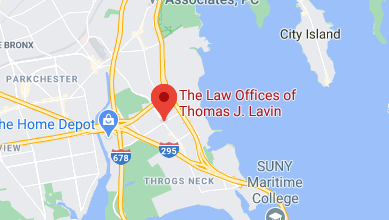
 3559 E Tremont Ave,
 (718) 957-8695
 contact@lawlavin.com